Engagement, Logistics, and Opportunity: Waycross–Ware County at Georgia’s 2026 Eggs and Issues
01/23/2026
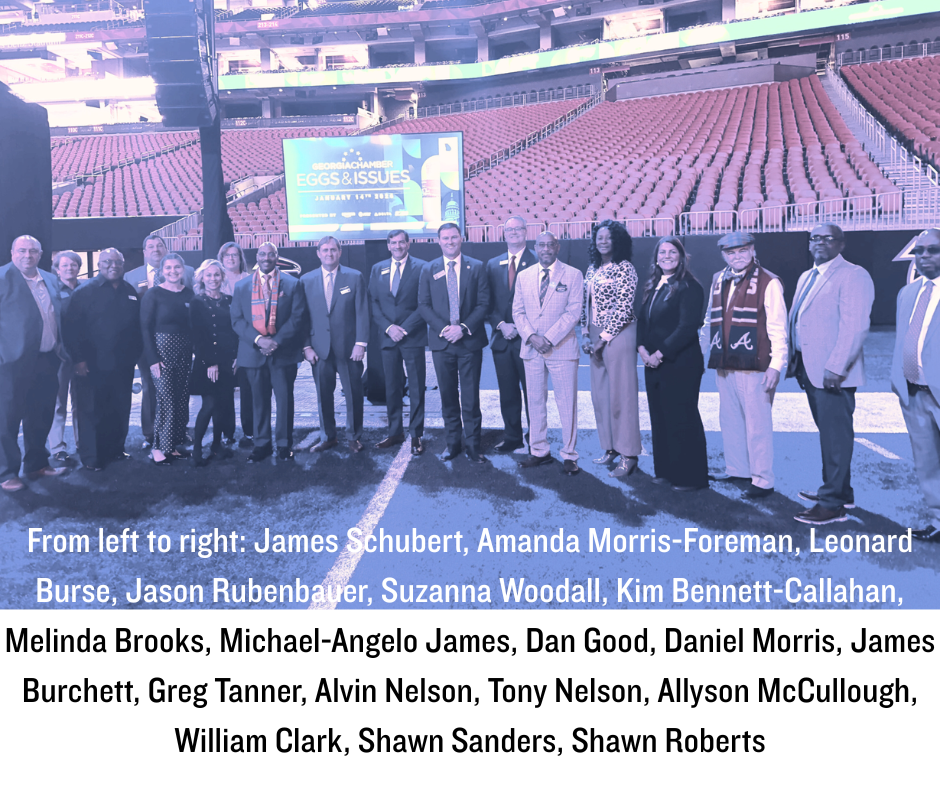
Leaders from across Waycross and Ware County were in attendance and advocating for our community.
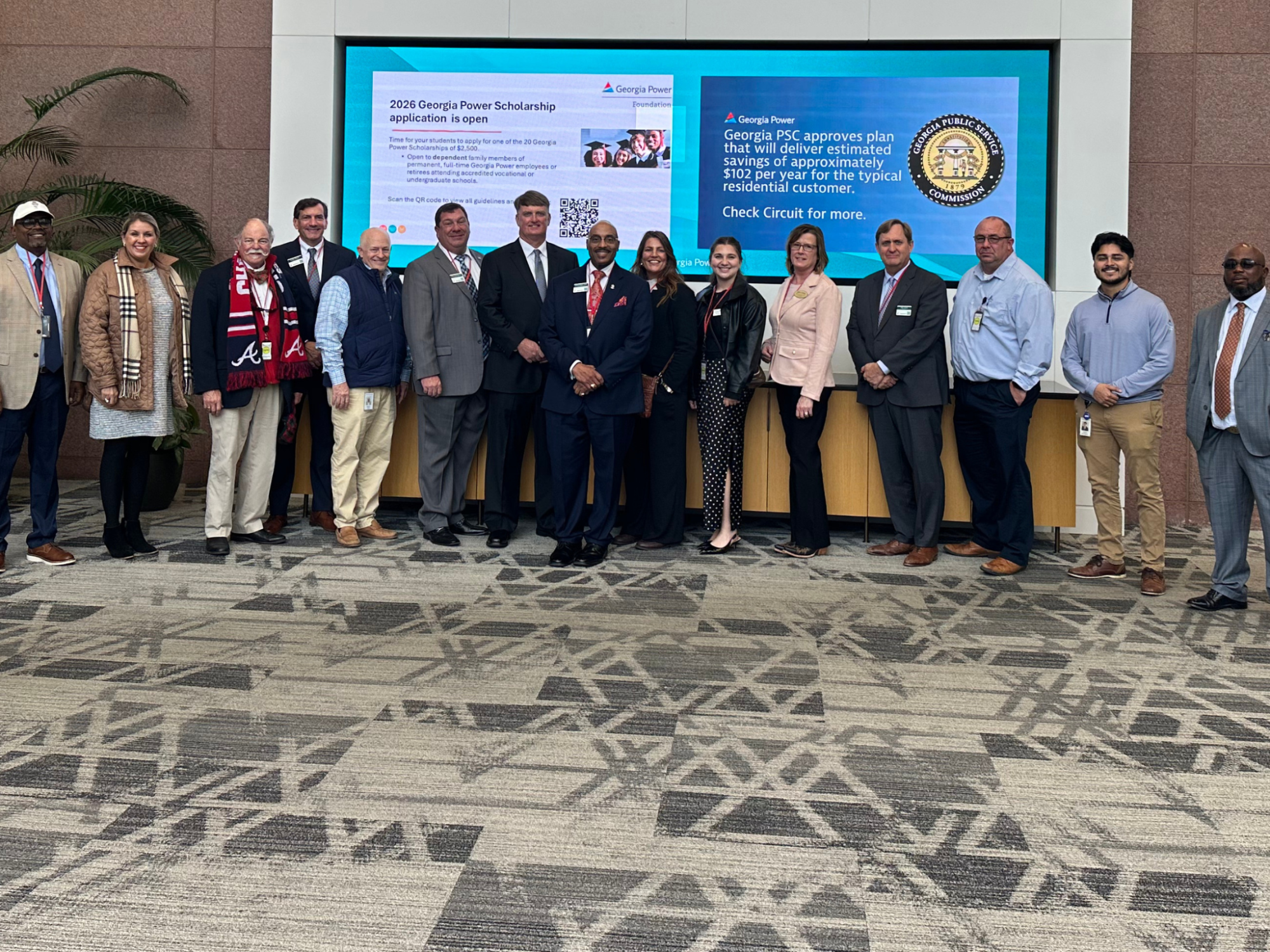
On January 14, 2026, members of the Waycross and Ware County Development Authority Board of Directors and several other community members attended the annual Eggs and Issues Breakfast, held at the Mercedes-Benz stadium in Atlanta. This sold-out event kicks off the 2026 Georgia State Legislative Session and sets the economic agenda. The event highlighted networking opportunities and discussions on Georgia’s economic status. The event is important for our community to have such a large and diverse presence because we are at the intersection of several forces shaping Georgia’s 2026 economy. Being present, engaged, and visible in statewide conversations and initiatives is essential.
Logistics and rail are a focal point to the success of our community. With Georgia’s trade‑dependent industries facing headwinds, areas with strategic logistics assets—like Waycross’s role as a major rail junction—are well‑positioned to attract companies seeking stable, cost‑effective distribution options. Presence ensures the region is included in these supply‑chain shifts.
Slower statewide growth means more competition for projects. Economic development activity is subdued in 2026, and Georgia will win fewer total projects overall. Regions that stay active, visible, and proactive will capture a larger share of a smaller project pool. Staying on the sideline risks being overlooked.
Population & labor challenges create opportunities for affordable, welcoming communities. As metro areas struggle with high costs, limited housing, and slowing migration, communities like Waycross—with available labor, lower costs, and room to grow—can attract businesses seeking stability and workforce accessibility. This advantage must be actively promoted.
Manufacturing & logistics expansions and re‑localization could benefit Waycross. Georgia’s manufacturing sector begins recovering in 2026, especially where logistics costs are low and sites are ready. Waycross–Ware’s transportation networks and available land make it a fit for suppliers, processors, and distribution operations—but only if the region shows up where decisions are made.
Rural regions need strong voices during shifting state priorities. As statewide attention focuses heavily on metro EV projects, data‑center expansion, and port‑driven growth, rural communities must maintain representation to ensure they receive support, investment, and visibility. Presence keeps Waycross–Ware County at the table.
In a year when Georgia’s growth is slower and competition for investment is higher, the Waycross and Ware County Development Authority must stay visible and engaged to secure its share of new jobs, logistics opportunities, and industrial investment.
[2026 Georgia Economic Outlook]
While in Atlanta, our group was fortunate enough to have Brent James, the Georgia Power
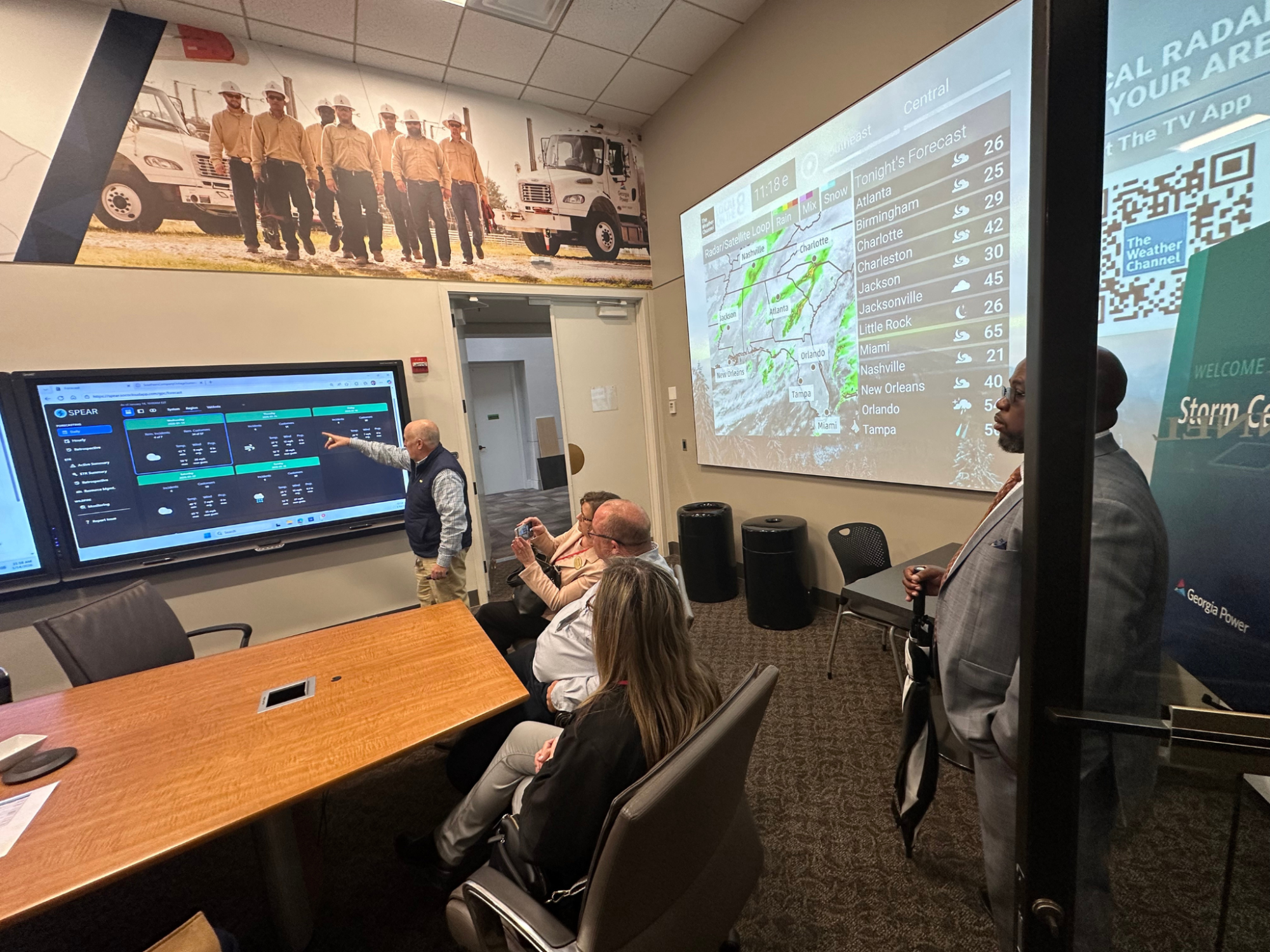
Area Manager of the Southwest Region--Waycross coordinate a tour of the Georgia Power Storm Preparedness Center. Conducted by David Banks, the Emergency Preparedness Manager for Georgia Power, the tour was very insightful. The Georgia Power Outages & Storm Center is a 24/7 hub for monitoring weather, managing emergency crews, and restoring power in the event of an outage. We were amazed at the cutting-edge technology that helps Georgia power make sure the lights stay on. There is a highly coordinated three phase process that helps them mobilize with astounding efficiency.
- Monitor (Before): Georgia Power tracks weather forecasts and proactively mobilizes extra crews. During this phase, they activate their Storm Center to prepare for immediate response.
- Mobilize (During/After): As soon as weather conditions are safe for workers, damage assessment teams are deployed to identify the specific cause of outages and the materials needed for repairs.
- Restore (After): The center tracks restoration progress in real-time, moving crews between areas as tasks are completed to maximize efficiency.
There is a strict restoration priority order that ensures vital community services and businesses are held in the utmost regard. And this helps ensure our companies and industries have less issues in adverse weather conditions. This tour made it evident that Georgia Power takes reliability seriously, investing in the tools, planning, and coordination needed to keep businesses and critical industries operating even when severe weather strikes.